The story, so far
As a Scottish piper I was always facinated by the design of shuttle pipes.
Back in the 2010s there were several makers I knew of (Dave Shaw, John Walsh and RT Sheperd, Paul Beekhuizen) making shuttle drones for Scottish smallpipes or musettes. In 2025 sadly only Walsh remains.
Besides looking uniquely different than "standard" bagpipes, I think that the compact shape offers some unexplored technical possibilities.
With my designs I aim to bring something new to the piping world.
Shuttle drones
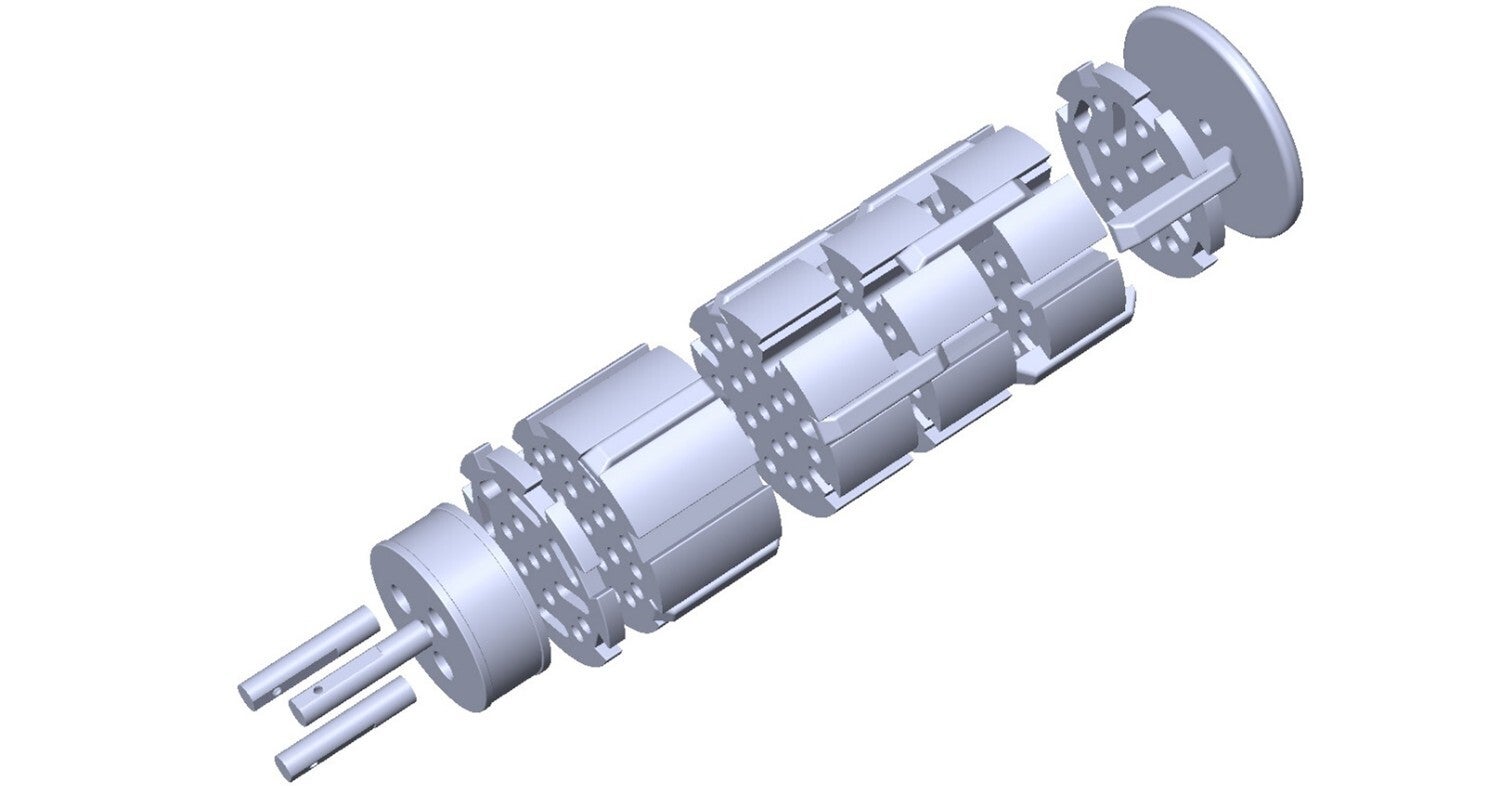
Shuttle drones have an extremely compact form factor by using bores which loop up and down in one solid body. In the historical designs, the shuttles slide over half open bores to change the effective length.
My first prototypes were made to copy that type of tuning mechanism, but a new approach was necessary to allow a switching mechanism at one end of the drone.
* * *
The image shows the first concept of my shuttle drone.
Reeds
The traditional double drone reeds are complicated to produce and not very compact.
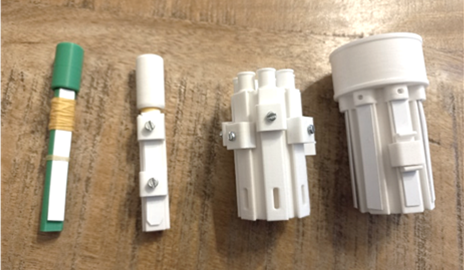
My drone reed designs went through many iterations to improve them step by step. One helpful modification was the combination of multiple reeds into a compact block to save space.
* * *
The photo shows some early design iterations.
Field testing
Synthetic materials cannot match the appeal of rare, expensive woods like ebony... OK I agree... But...
I don't mean to make anything traditional, I want instruments that last and can survive muddy festivals and smeltering cars and so on.
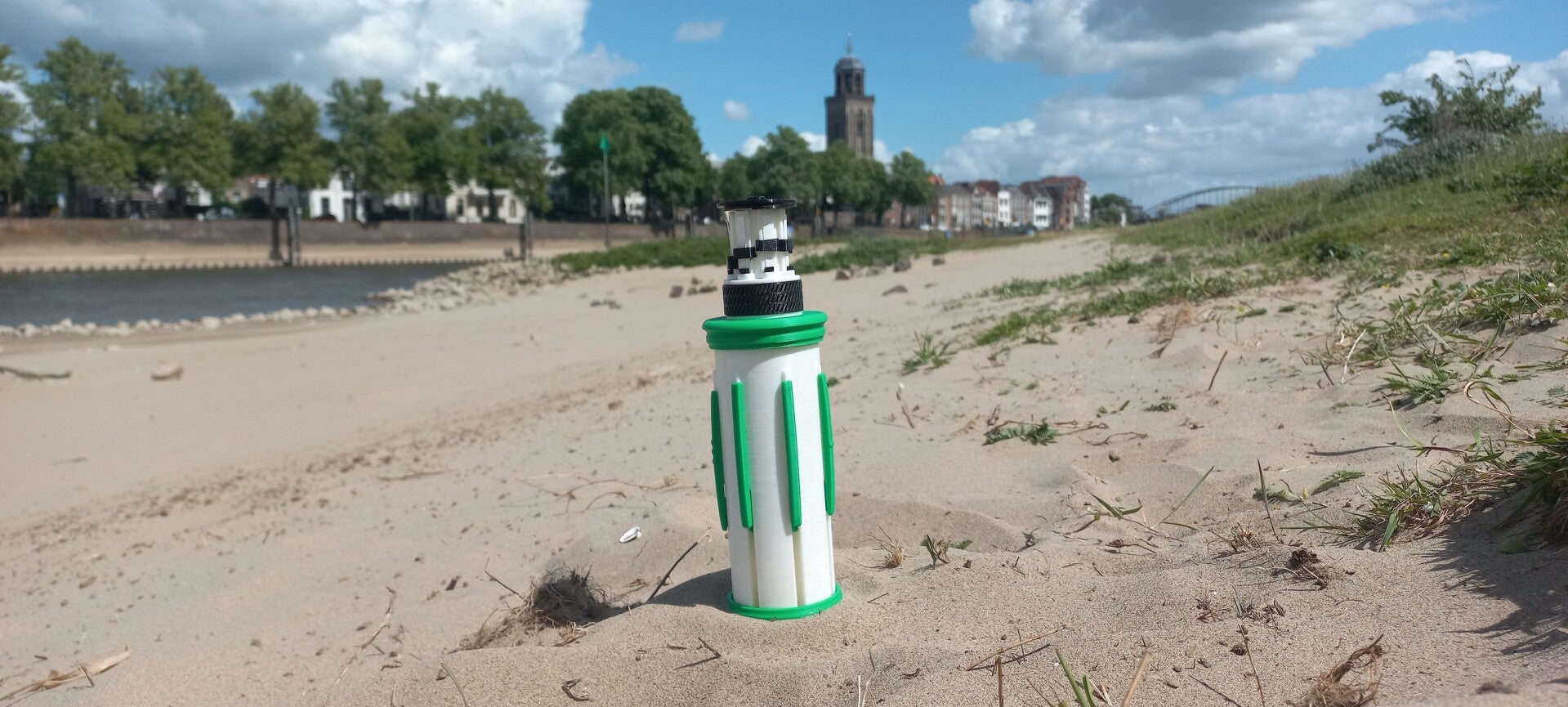
So, my instruments are thouroughly tested by taking them litterary everywhere I go.
* * *
The photo shows my favourite town with a thourough field test in progress (spring 2025)...
Production techniques
The instruments are produced with a combination of 3D printing techniques.
FDM (fused deposition modelling) uses a moving printhead to draw fine lines of molten plastic to build objects. Multiple lines can be drawn next to eachother to create thicker- stronger walls.
This technique is usefull because it can rapidly produce very useable prototypes in biodegradable plastic.
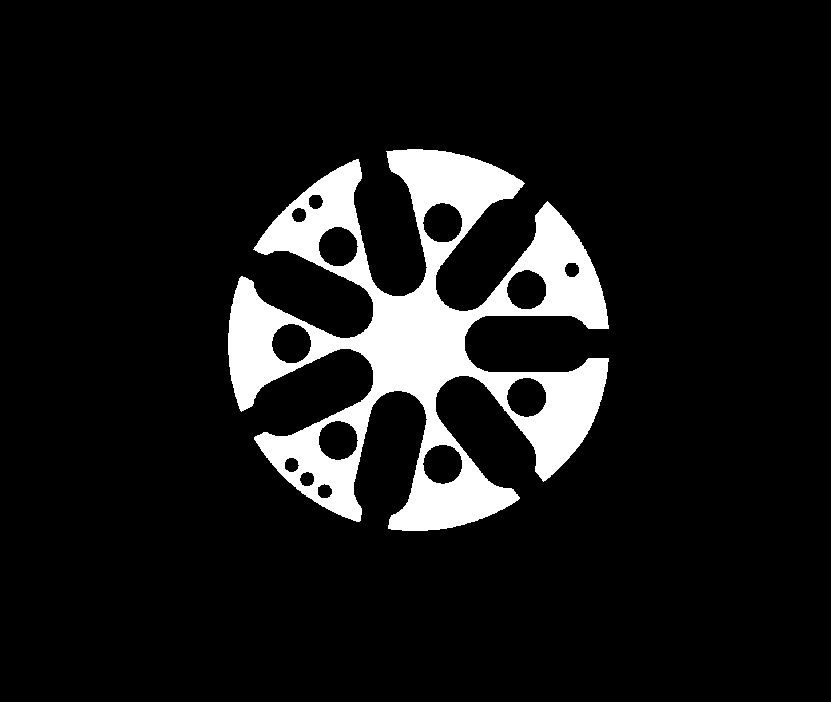
SLA (stereolithography) uses a LCD screen to expose liquid resins to UV light. The light solidifies the resin onto a buildplate and grows the object layer by layer.
This technique produces dense material with better accuracy than FDM. It feels similar to Delrin / POM which is extensively used in Scottish instruments.
* * *
The picture shows one "slice" for SLA printing. The LCD will show exactly this image in UV light to solidify this thin layer!